
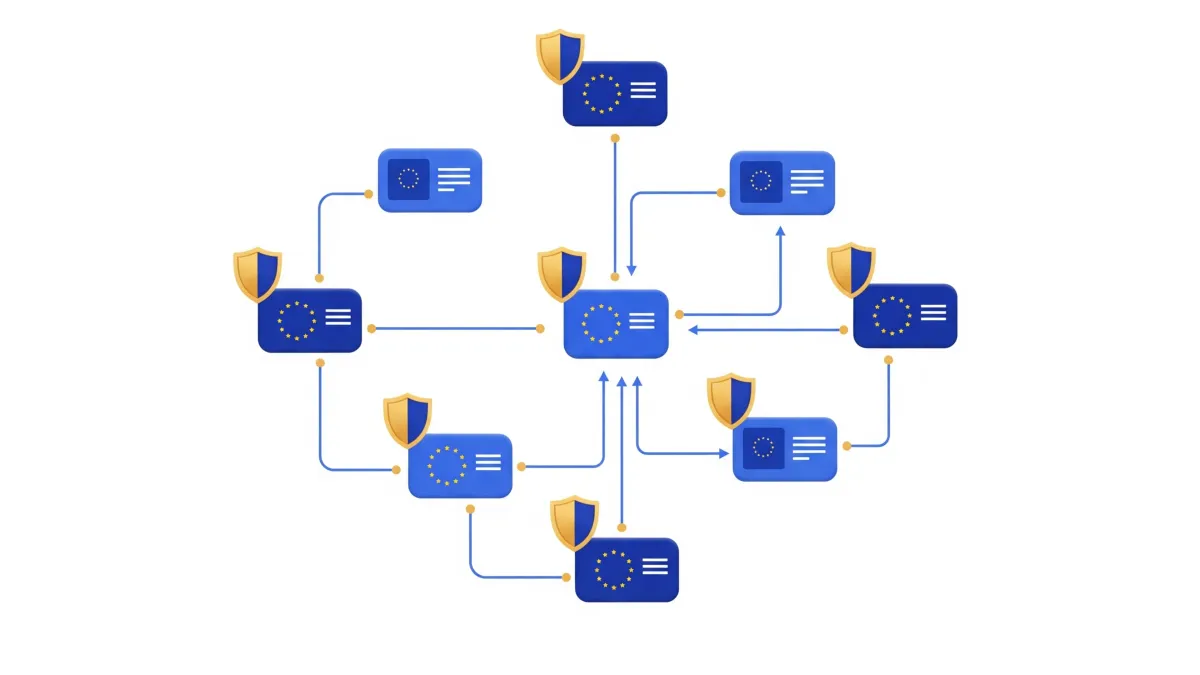
EDPB Unveils New Guidelines for Blockchain Data Processing
The European Data Protection Board (EDPB) has announced new guidelines on April 8, 2025, outlining stringent data protection standards for organizations that utilize blockchain technology. These Guidelines 02/2025 focus on the intricate relationship between the unchangeable nature of blockchain and the requirements imposed by the General Data Protection Regulation (GDPR). The EDPB’s documentation states that the decentralized structure of blockchain, combined with its complex mathematical foundations, results in significant challenges related to the handling of personal data.
Overview of the EDPB Guidelines
The newly issued guidelines impact various entities across the European Economic Area, including those in marketing technology, financial services, and any organization employing distributed ledger systems. The 2025 guidelines introduce rigorous technical and organizational mandates for processing data via blockchain, which encompass prohibitions on the storage of personal data on-chain, the necessity for Data Protection Impact Assessments (DPIAs), and specific compliance measures tailored to different blockchain architectures, while also clarifying the responsibilities of controllers in decentralized networks.
Details of the Guidelines
The guidelines were finalized on April 8, 2025, as Version 1.1 after a public consultation, marking the first in-depth regulatory framework since the implementation of GDPR in 2018 that addresses the intersection of blockchain technology and European data protection law. These requirements extend throughout the European Economic Area and apply extraterritorially to any organization processing the personal data of EU residents via blockchain, irrespective of the physical location of blockchain nodes—a critical consideration for international data transfer compliance.
Compliance Challenges Due to Technical Requirements
The 25-page document outlines the technical hurdles organizations encounter when deploying blockchain systems that contain personal data. Once information is recorded on a blockchain, it remains immutable, meaning it cannot be altered or deleted without causing inconsistencies, which directly contradicts GDPR stipulations regarding data modification and removal. The EDPB has differentiated various blockchain designs, noting that public permissionless blockchains, such as Bitcoin and Ethereum, present higher compliance risks compared to private permissioned systems, which provide clearer delineation of responsibilities.
Mitigating Data Protection Risks
To address data protection risks when personal data must be stored on blockchain, the guidelines propose three primary methods. One approach is the encryption of personal data, which limits access to those with the appropriate keys. However, the EDPB cautions that even the best encryption methods can become obsolete over time if the blockchain is retained indefinitely. Another method is hashing, which involves storing only hashed versions of personal data on-chain, keeping the original data securely off-chain. Yet, the guidelines warn that unsalted or unkeyed hashes alone may not sufficiently protect confidentiality.
Understanding Controller Responsibilities in Decentralized Networks
The guidelines tackle the nuanced issue of data controller responsibilities within decentralized blockchain networks. The EDPB asserts that neither the decentralized nature of the network nor the choice of technology absolves compliance with GDPR. Organizations must undertake a thorough evaluation of roles and responsibilities for each processing activity. In public permissionless blockchain systems, nodes can be classified as controllers or joint controllers if they influence processing purposes and methods. The EDPB advocates for the formation of consortiums or legal entities among nodes to enhance clarity regarding controller obligations, thus establishing stronger accountability for data protection.
Implementing Data Subject Rights in Blockchain
The guidelines highlight the necessity for blockchain systems to incorporate data subject rights from the design phase. The right to erasure presents significant challenges, as fulfilling deletion requests may be technically unfeasible when personal data is stored directly on a blockchain. Organizations must ensure that personal data can be anonymized effectively if such requests arise, meaning that transaction data should not allow for direct identification of individuals, and any supplementary off-chain data must be erased.
Risk Assessment and Evaluation Protocols
The EDPB mandates that Data Protection Impact Assessments (DPIAs) be carried out for blockchain processing activities that might pose high risks to individual rights and freedoms. Organizations are required to execute thorough risk evaluations that encompass the entirety of processing operations, including blockchain-specific risks. These risks extend beyond data storage to cover transaction communications, management of blocks, and off-chain personal data storage linked to in-chain identifiers.
Challenges of International Data Transfers
Blockchain technology frequently involves international data transfers, especially when nodes are situated outside the European Economic Area. The guidelines stress that such transfers must adhere to GDPR’s Chapter V requirements, even in public blockchain systems where node selection is not controlled. The EDPB recommends incorporating standard contractual clauses into agreements prior to accepting nodes to ensure compliance with data transfer regulations, emphasizing the need for privacy considerations from the design stage of blockchain activities.
Impact on Marketing Sector Amid Increasing Regulation
The release of the blockchain guidelines coincides with heightened regulatory scrutiny regarding data protection practices across Europe. In June 2025, German data protection authorities initiated standardized fine procedures aimed at unifying GDPR enforcement practices, which could have implications for blockchain applications in marketing technology. Recent regulatory actions indicate intense focus on technical compliance, as seen in proposed changes to consent protocols for email tracking by French authorities.
Marketing Challenges with Blockchain Integration
The marketing sector faces unique hurdles as blockchain technology gains traction in advertising technology, customer data platforms, and loyalty programs. Privacy expert Pia T. has raised concerns regarding blockchain’s use in age verification systems, warning that the immutable nature of blockchain data and associated cybersecurity risks could pose significant threats to privacy. Despite seeing only 1.3% of GDPR enforcement cases resulting in fines between 2018 and 2023, the adoption of standardized procedures may enhance the consistency of enforcement.
Significance of EDPB’s Guidance on Blockchain Compliance
The EDPB’s comprehensive guidelines represent the most thorough framework to date for ensuring compliance with data protection regulations in blockchain contexts. Organizations that process personal data through blockchain must now align their practices with these detailed requirements, preparing for increased regulatory scrutiny throughout Europe.
Understanding Key Marketing Technology Terms
Distributed Ledger Technologies (DLT): The EDPB defines DLT as a broad category encompassing technologies like blockchain, which maintain a distributed and synchronized database without centralized oversight. This technology is advantageous for marketing as it enables transparent tracking of advertising transactions, campaign attribution, and customer data verification without intermediary reliance.
Permissionless vs Permissioned Blockchains: The guidelines draw a distinction between public permissionless blockchains, where anyone can participate, and permissioned systems that require authorization to join. For marketing applications, permissioned blockchains typically offer clearer data controller roles and lower compliance risks.
Smart Contracts: These programmable transactions automatically execute predefined conditions, facilitating processes like influencer payments and programmatic advertising while ensuring transparent records of performance and obligations.
Data Minimization Principle: Emphasized by the EDPB, this GDPR requirement dictates that only necessary data should be processed in blockchain applications. For marketing teams, this means collecting only essential customer information relevant to specific campaigns, particularly important given blockchain’s immutable nature.
Pseudonymisation: This technique prevents personal data from being attributed to individuals without additional information, allowing marketing applications to analyze behaviors while maintaining privacy through hashed identifiers and encrypted preference data.
Joint Controllership: This framework establishes that multiple parties can share responsibility for processing personal data, impacting collaborations among brands, agencies, and tech providers in marketing, necessitating clear agreements on compliance obligations.
Cross-border Data Transfers: The guidelines highlight that blockchain often involves international data transfers, requiring marketing organizations to implement safeguards like standard contractual clauses when processing customer data across different jurisdictions.
Data Protection Impact Assessment (DPIA): Organizations are required to conduct DPIAs prior to implementing blockchain technology to evaluate potential privacy risks, especially in scenarios involving loyalty programs or decentralized advertising.
Zero-Knowledge Proofs: Mentioned in industry contexts, these cryptographic methods enable validation of information without revealing the data itself, applicable in marketing for age verification without storing sensitive details.
Privacy by Design: The guidelines call for data protection measures to be integrated at the design stage of processing systems. For marketing technology development, this requires building privacy safeguards into platforms and tools from the outset rather than retrofitting them later.


